Why Plumbing and HVAC Companies Rely on Call Forwarding
Discover how trade contractors prevent missed leads, eliminate constant phone distractions in the field, and capture bookable revenue around the clock.
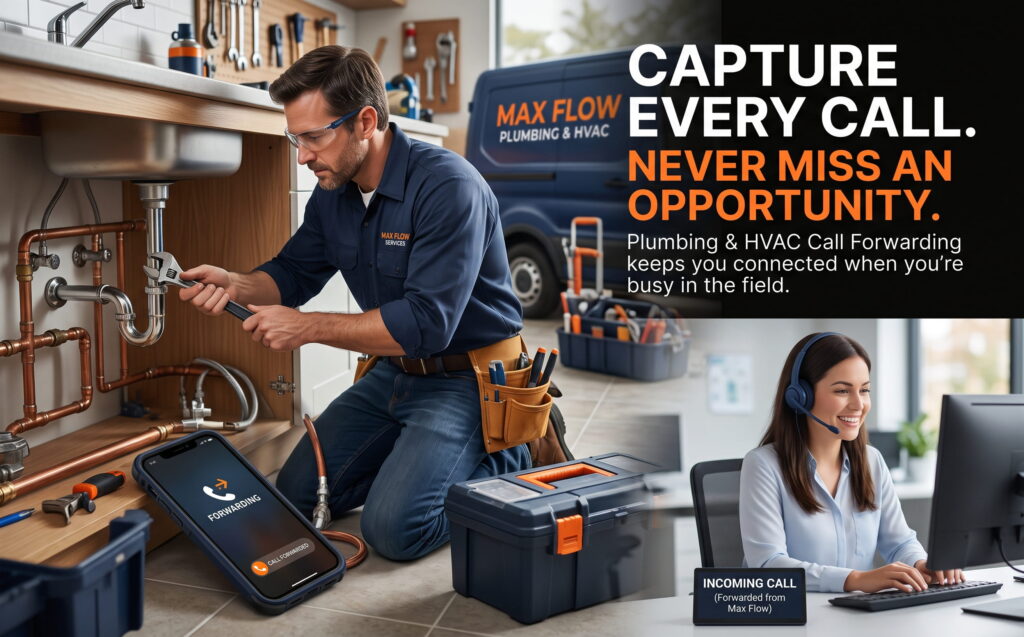
Plumbing and HVAC companies use call forwarding to send incoming calls to live support teams whenever field technicians are busy on job sites. Setting up call forwarding ensures that emergency calls are answered immediately by a real person, protecting lead pipelines without requiring owners to step away from physical tools.
Core Operational Benefits
Focus on physical repair work without stopping to answer a ringing cell phone.
Homeowners in an emergency hire the first company that provides a live voice.
Capture weekend and evening calls without working around the clock yourself.
The Trade Off: Physical Work vs. Ringing Phones
Trade contractors use call forwarding because they cannot physically answer every phone call while working. Most technicians spend their days crawling under sinks, welding pipes, driving vans between locations, or speaking directly with homeowners on site.
When a cell phone rings during a complex job, a contractor faces a tough choice. Stopping work to answer with dirty hands frustrates the client paying for field labor. Ignoring the call sends a prospective customer straight to voicemail. Call forwarding solves this operational dilemma by routing the call automatically to an off-site receptionist.
When Should You Start Forwarding Your Calls?
You should start using call forwarding as soon as missed calls or unreturned voicemails begin showing up on your phone log. Waiting to fix call handling until seasonal peaks arrive leads to lost job opportunities and burnt-out field staff.
- You routinely discover missed calls on your phone at the end of a long job.
- You cannot safely answer incoming calls while driving between service appointments.
- Evening and weekend inquiry calls go completely unanswered.
- Call volume during summer or winter peaks overwhelms your desk staff.
Four Ways Call Forwarding Drives Business Growth
Call forwarding helps service businesses grow by converting incoming phone traffic into scheduled dispatch appointments. Capturing leads instantly improves overall brand reputation and keeps dispatch boards full.
Every answered call represents a bookable job. Answering calls live increases your booking percentage without requiring you to carry a phone while working.
Homeowners dealing with a burst pipe or a broken heater want help right away. Speaking with a friendly, live person builds immediate confidence in your company.
Technicians complete installations faster and with higher attention to detail when they are not constantly stopping to answer phone calls.
Routing calls through structured answering processes ensures job details are taken down clearly, leading to organized daily technician routes.
What Types of Calls Should You Forward?
Contractors use call forwarding in flexible ways depending on daily field demands. You can choose to forward every call or set up conditional rules for overflow traffic.
| Forwarding Type | When to Use It |
|---|---|
| Daytime Overflow | When your main office line is busy or staff are on other calls. |
| After-Hours Support | To capture late-night emergencies and weekend requests. |
| Peak Season Spikes | During weather extremes when call volume surges quickly. |
Call Forwarding vs. Voicemail: The Hidden Revenue Difference
The biggest difference between call forwarding and voicemail is live interaction. Relying on voicemail creates delays, lowers client trust, and reduces overall booking rates across your service area.
| Feature | Voicemail Inbox | Live Call Forwarding |
|---|---|---|
| Customer Response | Delayed by hours | Immediate connection |
| Homeowner Reaction | Hangs up and calls a rival | Books service on the spot |
| Lead Retention | Low conversion rate | High conversion rate |
The Misconception That Loses Contractors Money
The biggest misconception about incoming calls is assuming that callers will leave a message and wait for a callback. In reality, a homeowner with a clogged drain or a broken cooling unit will not wait around. They hang up and call the next business listed on Google.
Returning a call two hours later is often too late because another shop has already booked the appointment. Call forwarding is not just a convenience. It is a simple operational strategy that captures real-time revenue when speed matters most.
Frequently Asked Questions
Why do plumbing and HVAC contractors use call forwarding?
Plumbing and HVAC contractors use call forwarding because they cannot answer incoming phone calls while driving, crawling under sinks, or working on job sites. Forwarding routes those calls to live operators so homeowners never hit voicemail.
What is the difference between call forwarding and voicemail for trade businesses?
Call forwarding connects callers to a live human being who can immediately book a job. Voicemail forces callers to wait, leading most homeowners in an emergency to hang up and call a competing contractor.
When should a trade contractor start using call forwarding?
A contractor should start using call forwarding as soon as they notice missed calls during field work, experience evening call demand, or find themselves stopping physical work to answer ringing phones.
Stop Losing Jobs to Voicemail
Do not let ringing phones disrupt your work in the field or leak leads to your competitors. Forward your line to Jill's Office and capture every bookable job live.
Book your discovery call today